
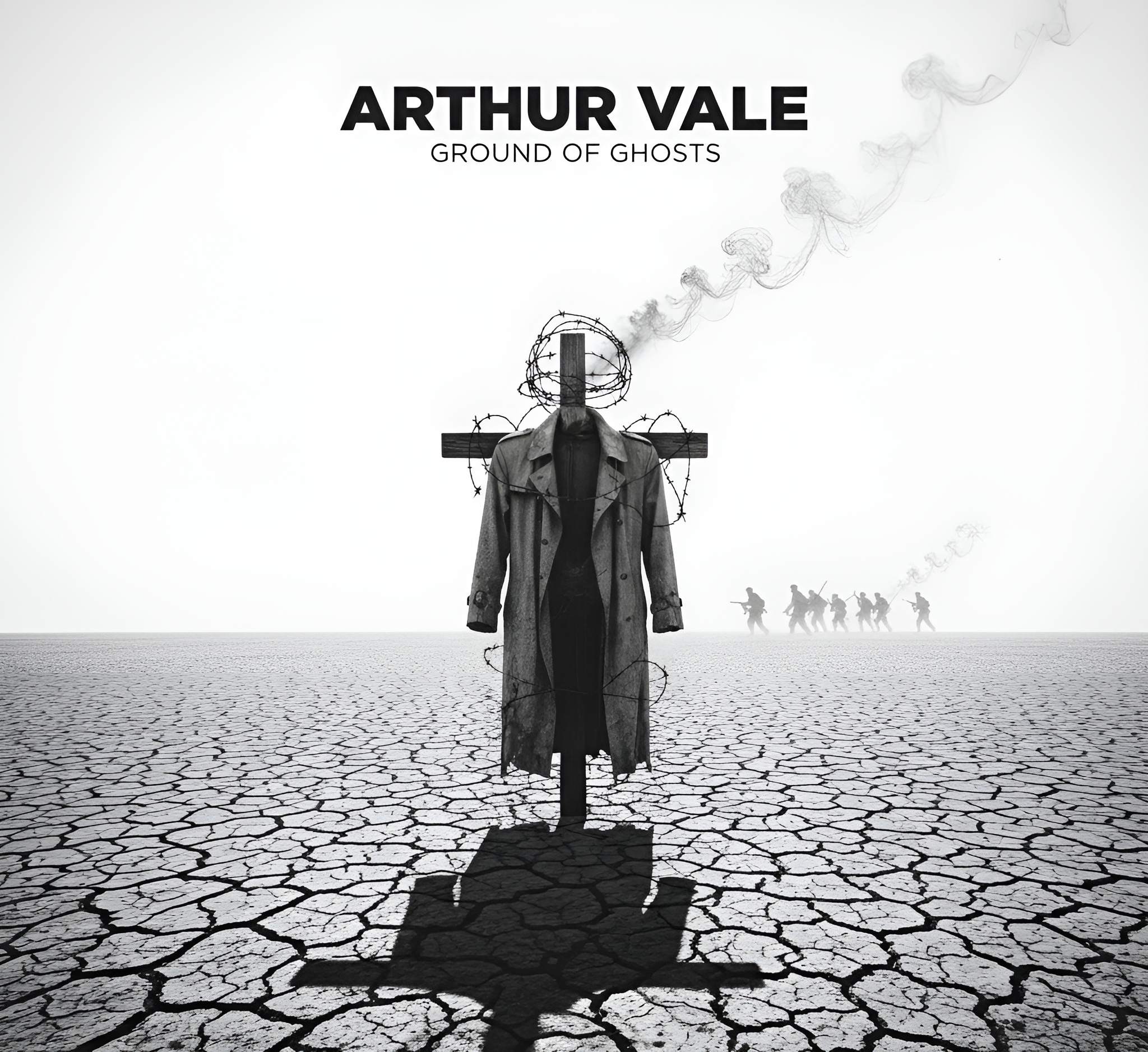
Arthur Vale’s Ground of Ghosts is not an album that demands attention. It earns it slowly, patiently, and with devastating effect. Released on October 29, 2025, the record stands as one of the most striking conceptual works in recent memory, not because of grand gestures or dramatic production, but because of its restraint. This is an album that whispers where others would shout, and in doing so, leaves a far deeper mark.
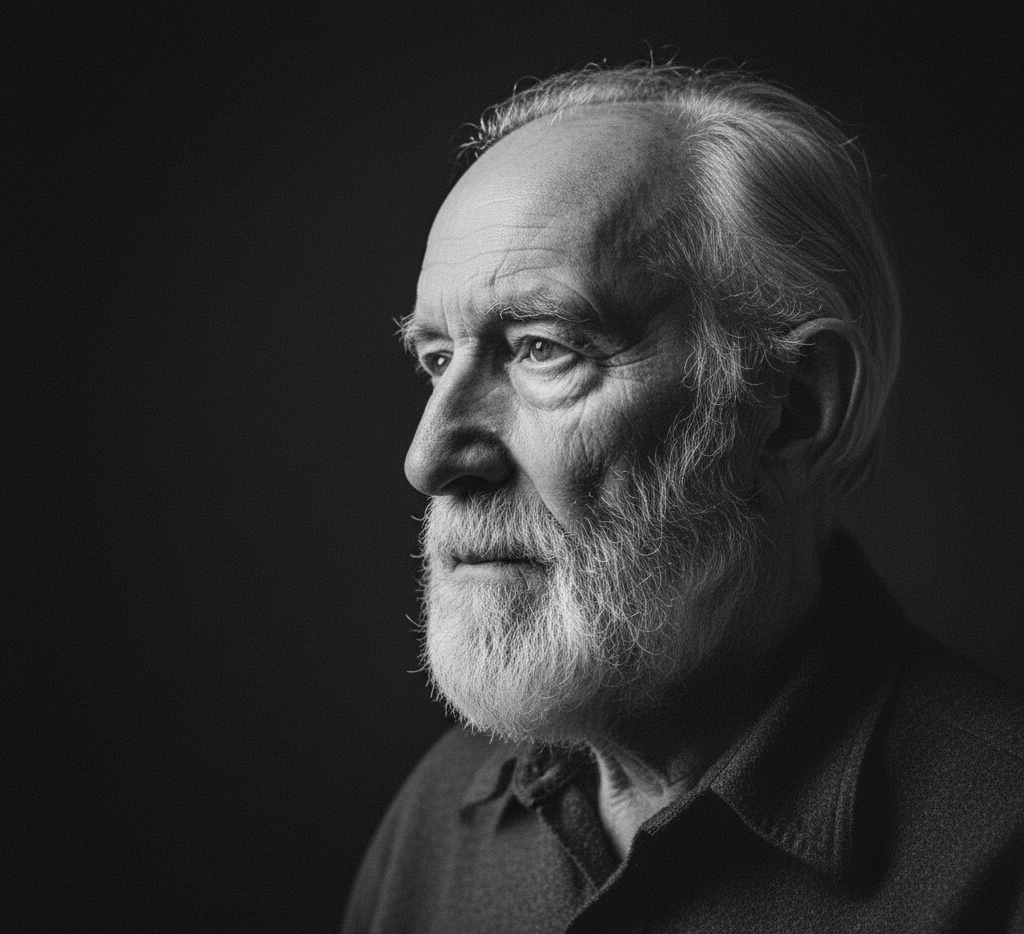
Framed around key moments of 20th-century warfare, Ground of Ghosts is less about battles and politics and more about aftermaths. Vale approaches history as a haunted landscape, filled with echoes rather than explosions. His voice, a deep, weathered baritone, carries the weight of someone who has spent a lifetime listening to the past. There are clear parallels to the later work of Leonard Cohen, not in imitation, but in spirit. Like Cohen, Vale understands the power of stillness, of leaving space for words to settle.
What makes the album so compelling is its refusal to romanticize conflict. Tracks like “Siege of Khe Sanh” unfold slowly, driven by a tense, almost suffocating organ line that mirrors the psychological strain of the battle itself. “The Rubble & The Snow” strips everything back to near silence, allowing the tragedy of Stalingrad to speak through absence rather than spectacle. Perhaps the most affecting moment comes with “The No Man’s Carol,” a haunting reflection on the 1914 Christmas Truce, where fleeting humanity cuts through the machinery of war.
Musically, the album is sparse but intentional. Minimalist arrangements, restrained percussion, and ghostly harmonies create a sense of timelessness. The production never distracts from the stories being told. Instead, it frames them gently, like a dim light over a faded photograph. Each track feels carefully placed, contributing to a larger emotional arc that lingers long after the final note fades.
What sets Ground of Ghosts apart is its perspective. This is not a protest album, nor is it an exercise in nostalgia. It is a meditation on memory, loss, and the people history tends to overlook. Vale doesn’t write from the viewpoint of generals or victors, but from the margins, from the quiet spaces where trauma settles. His own words describe it best: this is an album about the ghosts war leaves behind, the ones that remain long after the noise has stopped.
At 80 years old, Arthur Vale delivers this work with remarkable clarity and purpose. There is no sense of nostalgia here, only reflection. Ground of Ghosts feels like the culmination of a lifetime of observation, filtered through empathy and restraint. It is not an easy listen, but it is a necessary one.
In a musical landscape often driven by immediacy, Ground of Ghosts stands apart as something rare: a record that asks you to slow down, listen closely, and sit with uncomfortable truths. It is haunting, dignified, and deeply human — a quiet masterpiece that will resonate long after its final echo fades.
 English