
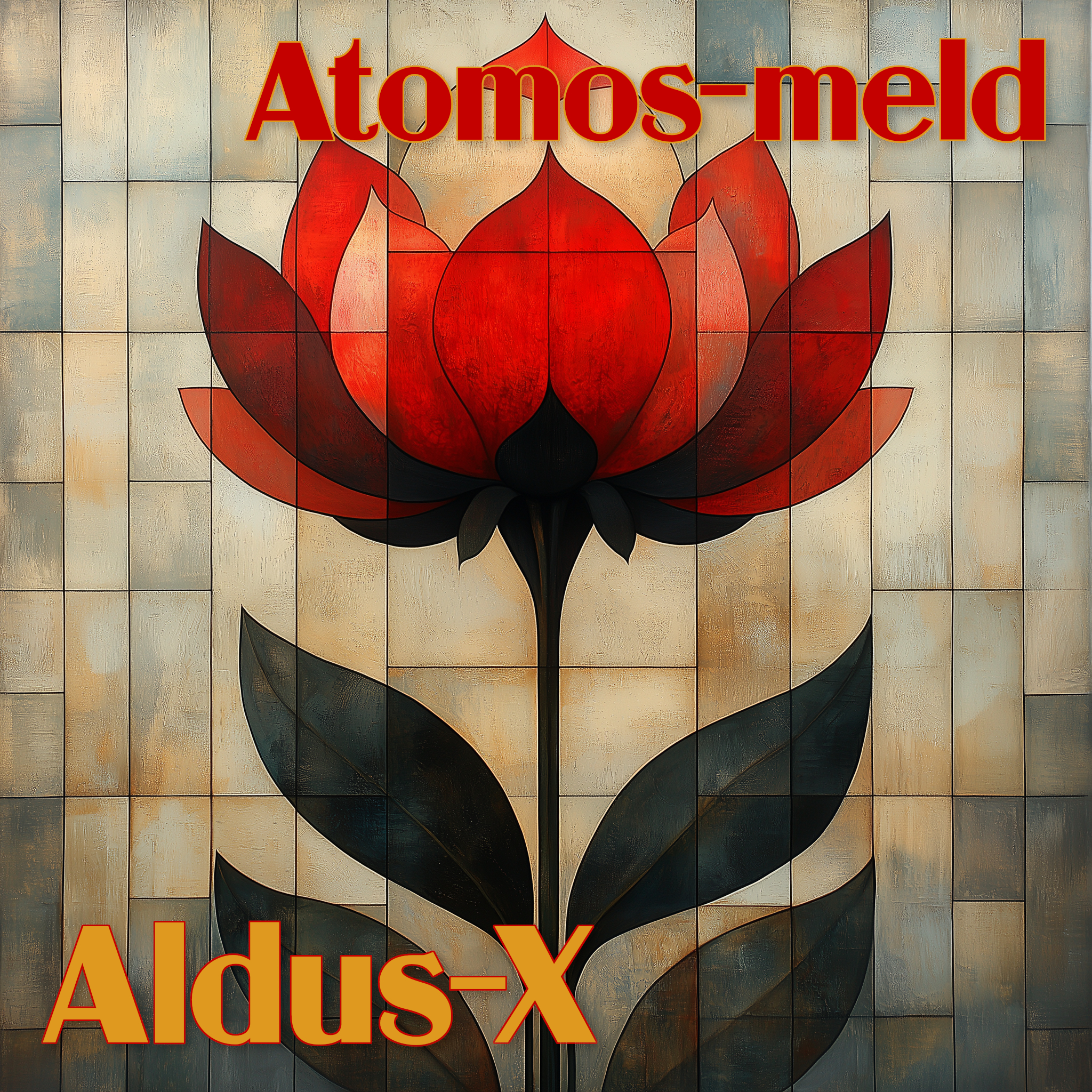
There’s something quietly arresting about Aldus-X. In a musical landscape often driven by excess, this project thrives on restraint, intention, and depth. Built as a solo endeavor by composer and artist Brant von Goble, Aldus-X feels less like a band and more like a living system — one that evolves through motion, discipline, and thoughtful design rather than spectacle.

What immediately stands out is the project’s philosophical clarity. Aldus-X is rooted in minimalism, but not in a cold or distant way. The influence of Philip Glass, Max Richter, Michael Nyman, and Béla Bartók is present, yet never derivative. Instead, those reference points act as scaffolding for something more personal. The music unfolds slowly, deliberately, with repeating figures that shift almost imperceptibly over time, drawing the listener inward rather than demanding attention.
The compositional style is both structured and fluid. Rhythms lock into place with a sense of inevitability, while melodies drift and evolve, creating a feeling of movement without urgency. There’s a cinematic quality to the work, but it doesn’t rely on grand gestures. Instead, tension builds through subtle changes in harmony, pacing, and texture. It’s the kind of music that rewards patience, revealing new layers with each listen.
One of the most compelling aspects of Aldus-X is the way the project is created. Everything is composed, arranged, mixed, and mastered by a single artist, often while on the move, without the comfort of a traditional studio setup. That nomadic process becomes part of the music’s identity. You can hear it in the sense of transience, in the way themes seem to pass through rather than settle. There’s an honesty to it, a feeling that these pieces exist because they needed to exist, not because they were engineered for a specific outcome.
The emotional tone sits somewhere between contemplation and quiet urgency. At times, the music feels meditative, almost meditative in its repetition. At others, it carries a sense of unresolved tension, as if reflecting modern life’s constant push and pull between stillness and motion. It’s easy to imagine these compositions accompanying film, visual art, or long solitary walks, but they stand just as strongly on their own.
What makes Aldus-X especially compelling is its refusal to overexplain itself. There are no grand statements or forced narratives. Instead, the project invites listeners to engage on their own terms. The music doesn’t dictate emotion; it opens space for it. That balance between accessibility and intellectual depth is rare, and it’s where Aldus-X truly shines.
In an era where music is often designed for instant impact, Aldus-X offers something far more lasting. It’s thoughtful, immersive, and quietly powerful — the kind of work that lingers long after the final note fades. This is modern composition at its most human: disciplined, curious, and deeply reflective.
 English