
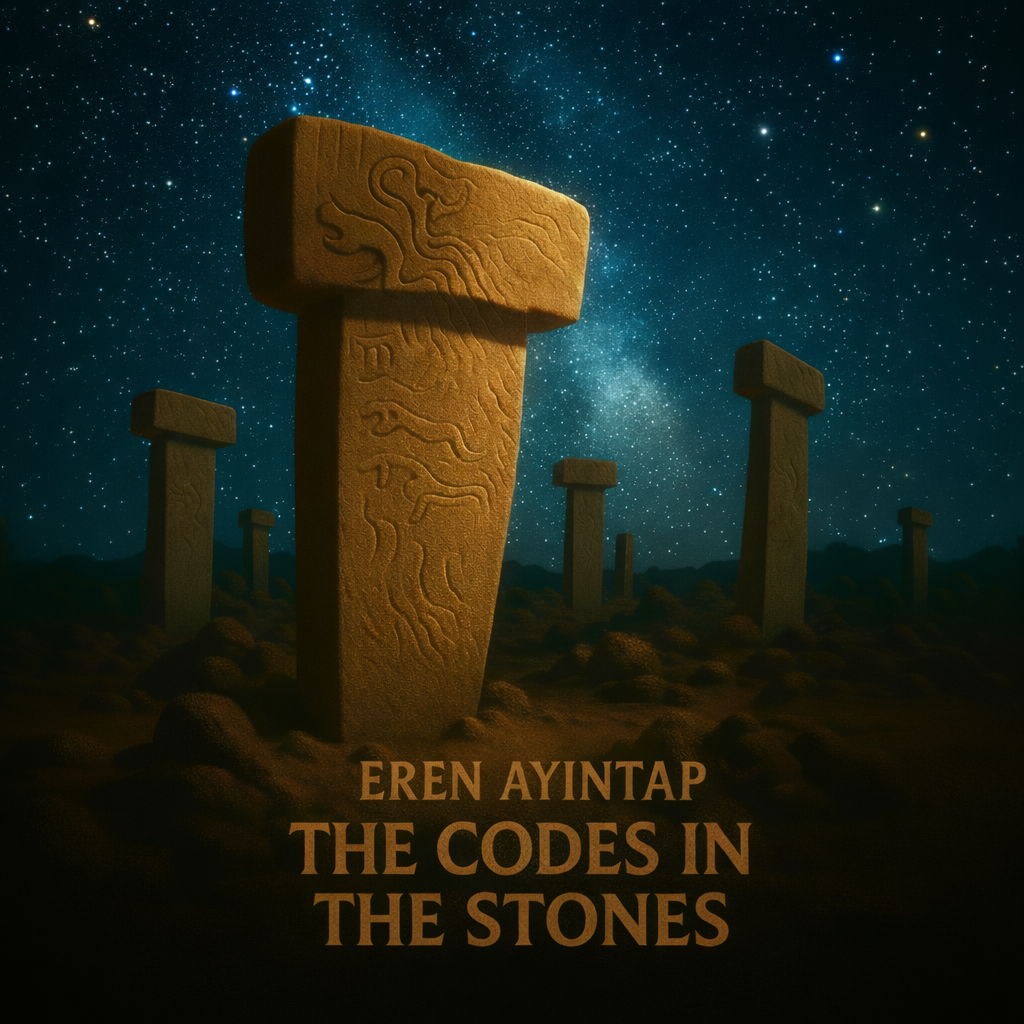
There’s something immediately gripping about Codes in the Stones. From the first moments, it’s clear that Eren Ayıntap isn’t interested in making disposable metal. This is a project built with intention, vision, and a deep sense of curiosity about where humanity comes from and where it may be heading. As an independent artist working at the intersection of melodic, power, and symphonic metal, Ayıntap has crafted an album that feels both cinematic and philosophical, heavy yet thoughtful.

Released on January 1, 2026, Codes in the Stones is a concept album that explores ancient civilizations, cosmic phenomena, and humanity’s forgotten origins. What makes the record stand out is how naturally these themes are woven into the music. Rather than feeling abstract or overly academic, the album carries a strong emotional pull, driven by thunderous riffs, soaring melodies, and sweeping orchestration that give each track a sense of purpose and scale.
Eren_Ayintap_press_release
Musically, Ayıntap strikes a careful balance between power metal intensity and symphonic depth. The guitars are sharp and commanding, the rhythms punch with urgency, and the orchestral layers add a cinematic weight that elevates the storytelling. There’s a strong sense of movement throughout the album, as if each track is another chapter in a larger mythological narrative. You can hear influences of progressive metal and classic symphonic styles, but the sound never feels derivative. Instead, it feels like its own universe.
What impressed me most is how committed the album is to its concept. Codes in the Stones doesn’t just reference ancient civilizations or cosmic themes for aesthetic appeal. It fully immerses itself in the idea of lost knowledge, monumental structures, and humanity’s ongoing search for meaning. Tracks feel inspired by places like Göbekli Tepe and other ancient sites that challenge what we think we know about early civilization. There’s a sense of awe throughout the album, as if the music is inviting listeners to look beyond the present and question the origins of human consciousness.
Vocally, the delivery carries both power and restraint. Ayıntap doesn’t over-sing; instead, he allows the emotion and narrative to guide the performance. This approach works well with the album’s themes, giving the songs a grounded, almost philosophical tone. The production is polished without feeling sterile, maintaining a raw edge that suits the album’s conceptual weight.
What also stands out is the ambition behind the project. Following the success of A Timeless Echo, which gained international traction and drew listeners from across Europe, the US, and Australia, Codes in the Stones feels like a confident next step. It’s the sound of an artist refining his vision and expanding it outward, trusting listeners to follow him into deeper and more complex territory.
Ultimately, Codes in the Stones is not just an album—it’s an experience. It rewards attentive listening and invites reflection, blending metal’s raw energy with thoughtful, almost philosophical storytelling. For fans of melodic and symphonic metal who appreciate narrative depth and conceptual ambition, this release stands out as one of the more compelling projects of its kind.
 English