
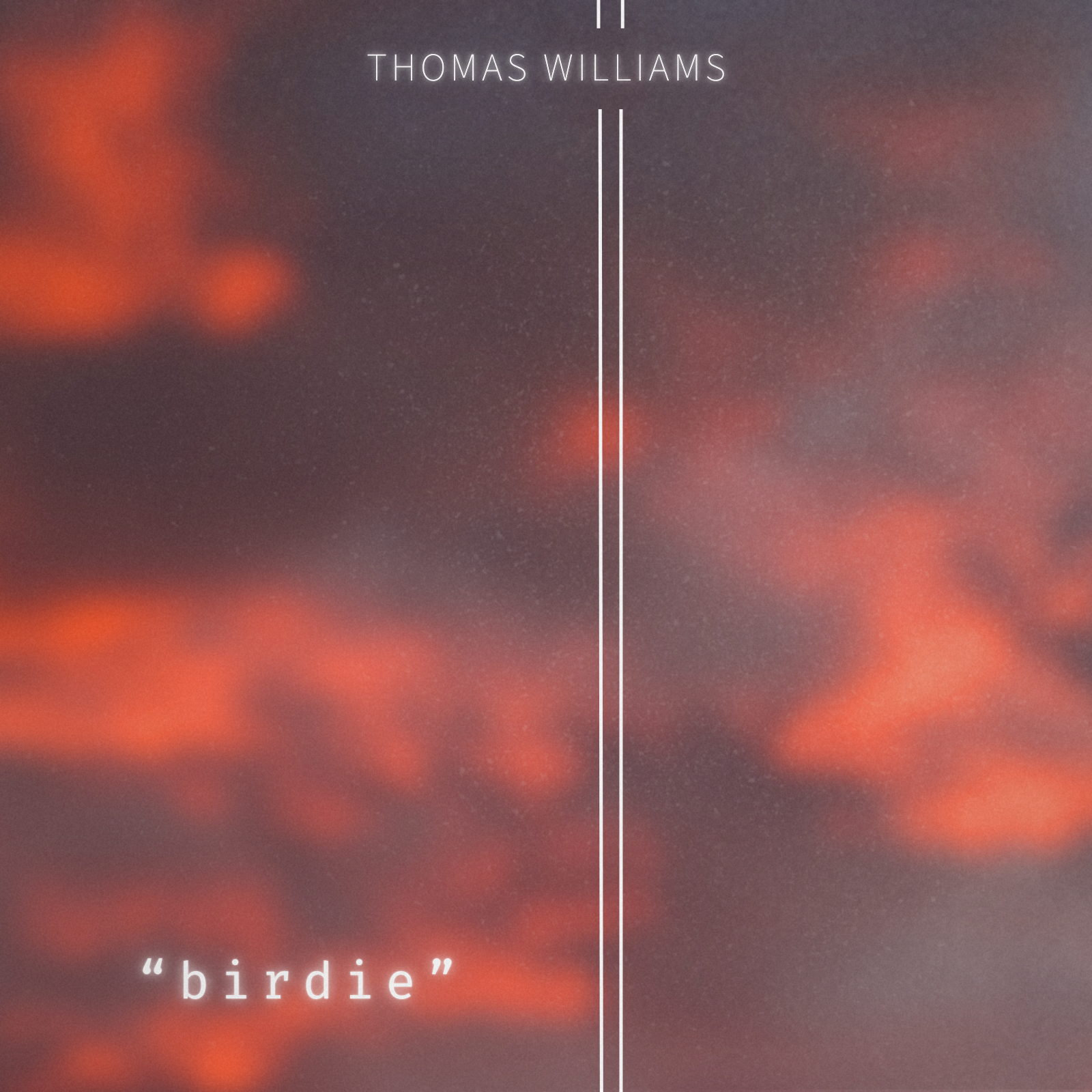
There is something quietly magnetic about “Birdie.” It does not shout for attention. Instead, it pulls you in with texture, mood, and emotional clarity. With this single, Thomas Williams steps fully into his own creative identity, blending his jazz background with indie sensibilities in a way that feels natural and earned.
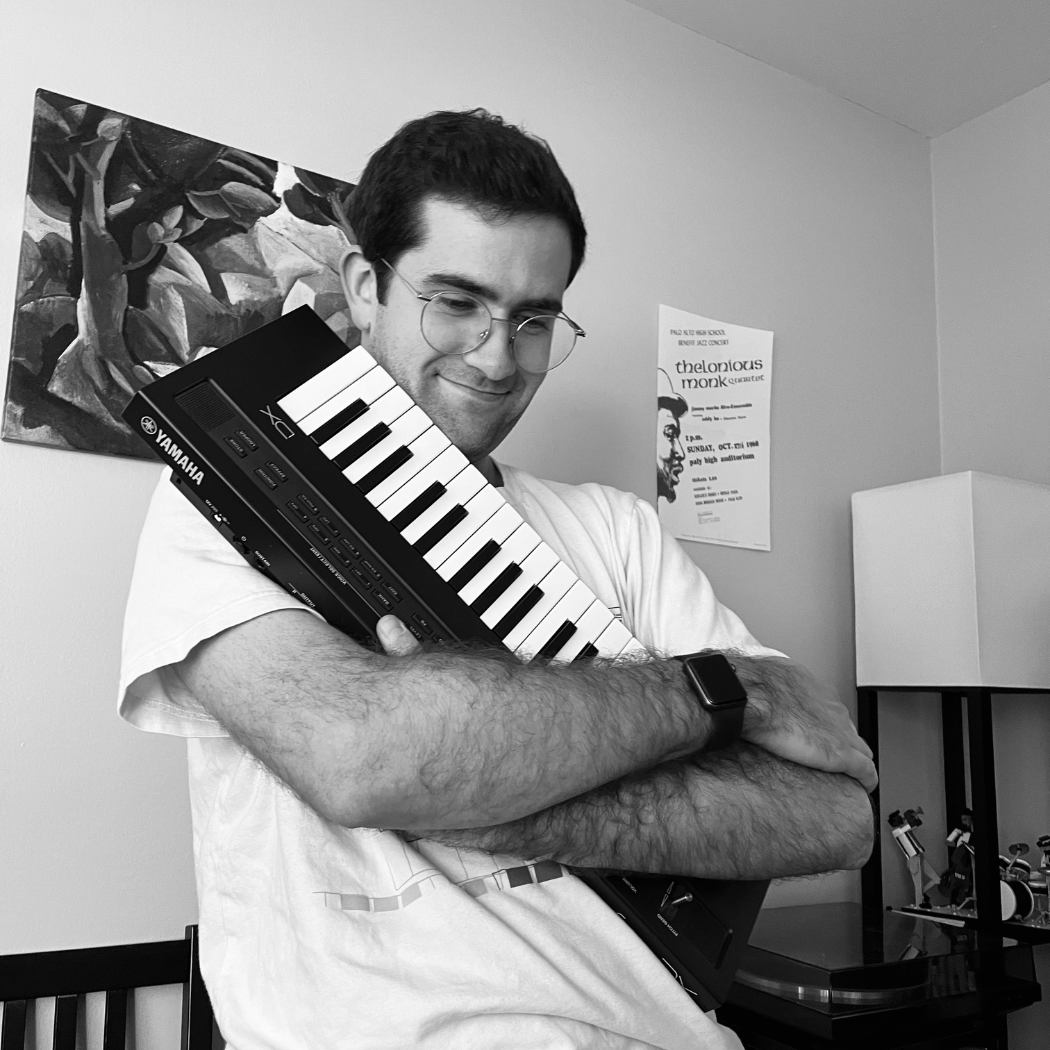
Released on February 20th, 2026, “Birdie” documents a personal turning point. The song was written in the aftermath of a breakup that pushed Williams to move across the country and pursue music more seriously. That backstory gives the track weight. This is not heartbreak as a vague theme. It is heartbreak as catalyst. You can hear that sense of transition in the music itself.
What stands out immediately is the atmosphere. Drawing influence from artists like Mac Demarco, Beach House, Crumb, and Mk.gee, Williams crafts a sound that is hazy but focused. The melodies are undeniably singable, yet they float within layered textures that feel immersive and slightly off-centre. The production never feels cluttered. Instead, it leans into mood, allowing space and tone to carry as much emotion as the lyrics.
Williams’ background in jazz studies at Michigan State University adds an interesting layer to the project. While “Birdie” sits firmly in the indie sphere, you can sense a musician who understands arrangement and subtle rhythmic shifts. There is a quiet sophistication in how the elements interact. Nothing feels accidental.
The recording process adds to the song’s charm. Tracked entirely in Williams’ Miami apartment using budget, consumer-grade gear, “Birdie” proves that creativity is not limited by expensive studios. In fact, the home-recorded setting enhances the intimacy. The track feels personal and unfiltered, as though it was created in real time with no safety net.
Longtime friend and guitarist Lucas LaFave contributes guitar parts that complement Williams’ vision perfectly. Their history as collaborators from their university days shows in the ease of the performance. The guitars shimmer and drift, sometimes anchoring the track, sometimes dissolving into the atmosphere.
Lyrically, “Birdie” resonates because it is relatable without being cliché. The song reflects on loss, self-doubt, and the uncertainty that follows a major life shift. Yet there is also growth embedded in the lines. The title itself feels symbolic, suggesting fragility and movement at the same time.
What I appreciate most is that “Birdie” feels like a culmination rather than an experiment. Williams has described it as the peak of his journey in production and mixing, and that confidence comes through. It sounds like an artist who has found a space where his technical training and personal taste intersect.
“Birdie” is not just a breakup song. It is a document of reinvention. Thomas Williams proves that with vision, honesty, and a laptop in a living room, you can build something that feels both intimate and expansive.
connect with Thomas Williams on
 English