
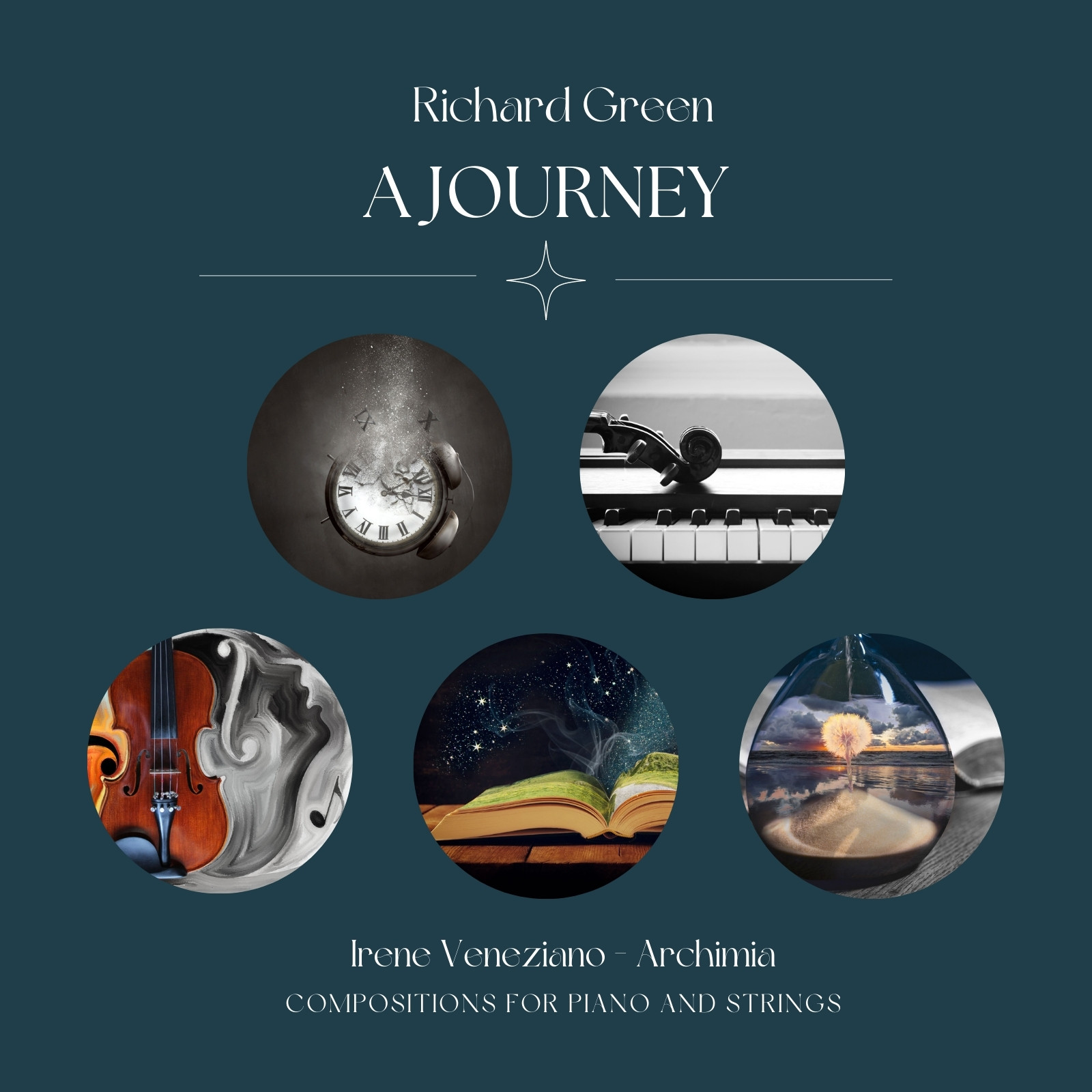
With “Sad but Beautiful,” Richard Green proves that instrumental music can communicate emotional complexity just as powerfully as lyrics. The track sits at the emotional center of his ambitious trilogy A Journey, a three-part neoclassical project designed not simply as separate releases, but as one connected narrative told entirely through composition.

What immediately stands out is the philosophy behind the piece itself. Richard describes life as something inherently beautiful yet inevitably touched by sadness, “Nature’s law,” as he puts it. That duality becomes the emotional foundation of the composition. Rather than choosing between melancholy and hope, the song allows both to coexist naturally.
Musically, the track moves through classical, pop, and blues influences with surprising fluidity. The neoclassical framework gives the composition elegance and structure, while subtle melodic choices introduce warmth and accessibility that prevent it from feeling distant or academic. There is complexity here, but it never feels self-conscious.
A huge part of the piece’s success comes from the performances themselves. Pianist Irene Venezano and the string quartet Archimia bring extraordinary precision and emotional sensitivity to the arrangement. The composition asks a lot from its performers, shifting through delicate passages, cinematic crescendos, and emotionally layered phrasing, but the musicians navigate it with remarkable control.

What I especially appreciate is the sense of narrative movement throughout the trilogy concept itself. A Journey, followed by The Circle Closes and concluding with First Light, creates the feeling of an emotional cycle unfolding over time rather than isolated tracks existing independently. Even the artwork and sequencing are designed to reinforce that continuity.
Richard Green’s broader musical background also makes this project more compelling. Before moving into neoclassical composition, he explored electronic music and other styles, and that versatility still lingers beneath the surface of these arrangements. You can hear someone who understands structure from multiple musical worlds rather than someone confined purely to classical tradition.
That openness gives the music emotional immediacy.

For me, “Sad but Beautiful” works because it understands something fundamental about human experience: sadness and beauty are often inseparable. The piece never tries to resolve that tension completely. It simply allows listeners to sit inside it for a while
Connect with RICHARD GREEN on
 English