
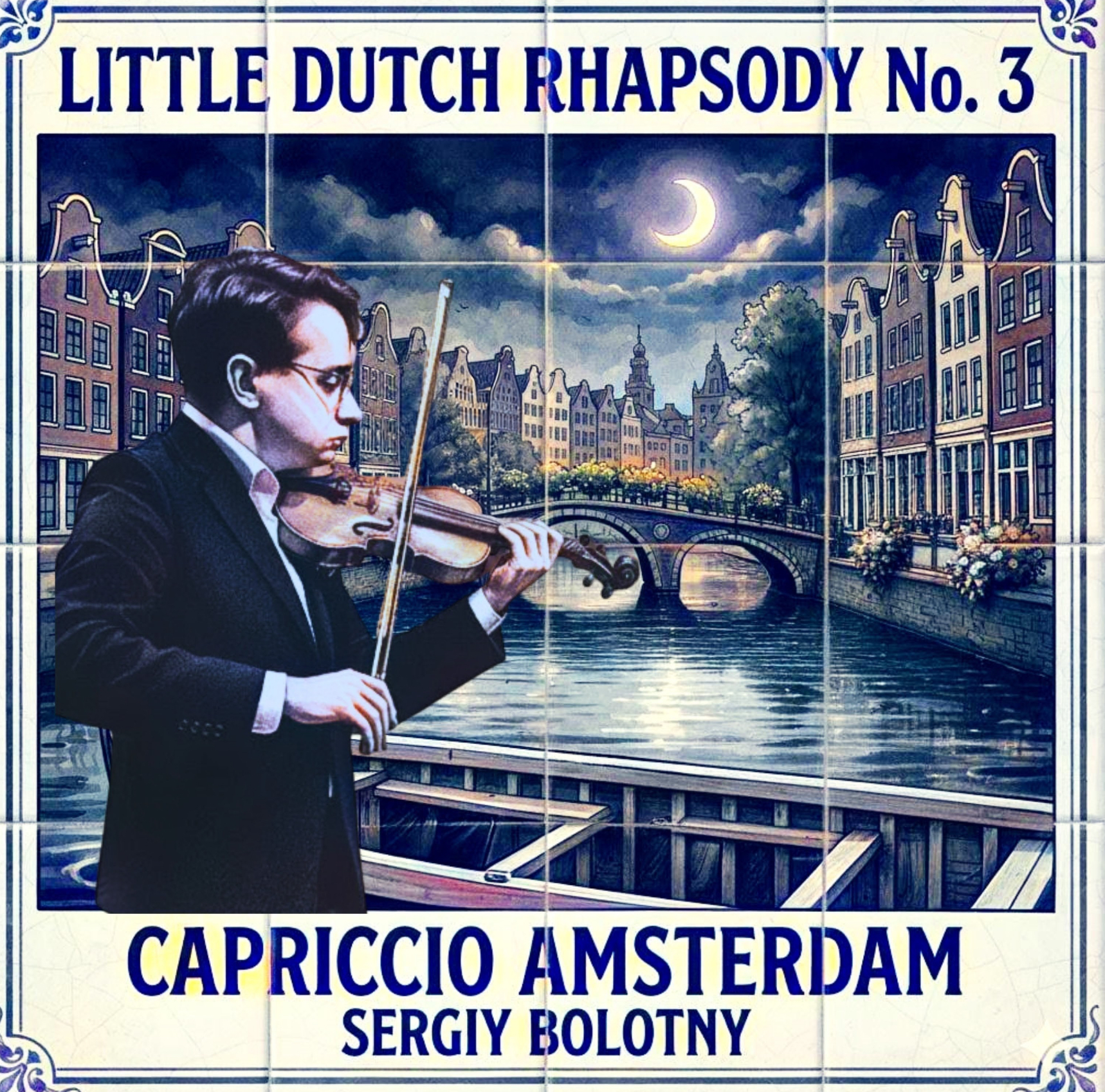
There is something special about taking a melody that already carries a strong sense of place and giving it a completely new musical life. In “Little Dutch Rhapsody No. 3: Capriccio Amsterdam,” concert violinist Sergiy Bolotny does exactly that, transforming a familiar piece of Dutch musical heritage into an expressive solo violin work.
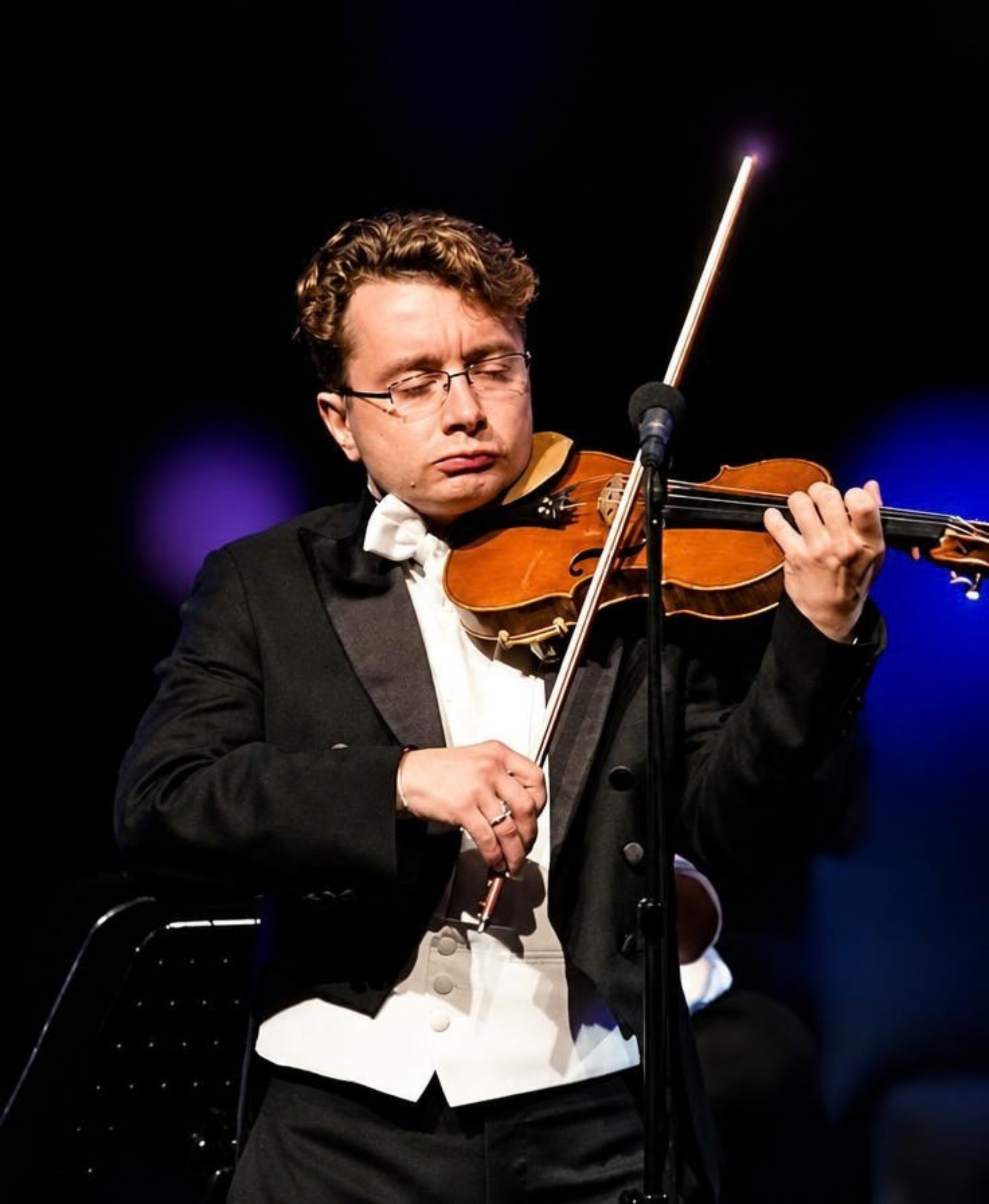
At the heart of the piece is Pieter Goemans’ “Aan de Amsterdamse grachten,” a melody closely associated with Amsterdam. Bolotny does not simply reproduce the familiar theme. Instead, he reimagines it through the tradition of the Old-Viennese violin caprice, particularly the style associated with Fritz Kreisler.
That combination gives the piece an interesting cultural meeting point. The melody carries the character and nostalgia of Amsterdam, while the violin writing brings the elegance, ornamentation, and virtuosity of the Viennese tradition into the picture.
“Capriccio Amsterdam” moves through lyrical cantabile passages, expressive rubato, rich double-stops, and playful variations. There is a sense of the violin constantly changing character, moving from moments of warmth and reflection into passages that demand greater technical precision from the performer.
What makes the piece particularly appealing is that its virtuosity is connected to something familiar. The technical demands are not simply there to demonstrate what a concert violinist can do. They are used to explore and reshape a melody that already carries cultural memory. The result is a work that sits between classical tradition, neo-Romantic expression, and contemporary reinterpretation.
The recording approach also plays an important role. Bolotny chose to record the work acoustically, allowing the natural resonance of the room and the instrument to remain part of the listening experience. Rather than relying heavily on digital processing, the recording aims to preserve the breathing quality of the violin, including the natural texture of the bow and the instrument’s overtones.
That choice feels appropriate for a piece so closely connected to musical heritage. There is no need to hide the physical presence of the instrument when the violin itself is the entire focus.
Bolotny’s background makes the project even more fitting. Born in Ukraine and now based in the Netherlands, he serves as Assistant Second Concertmaster of the Noord Nederlands Orkest and has studied in Lviv, Kyiv, and Vienna. His musical work has also explored Ukrainian and Dutch cultural heritage through his Ukrainian Caprices and Little Dutch Rhapsodies.
“Little Dutch Rhapsody No. 3: Capriccio Amsterdam” continues that interest in taking regional musical memory and bringing it into a concert setting. It respects the melody that inspired it while allowing the violin to take it somewhere new.
Rather than treating tradition as something fixed, Bolotny treats it as material that can still evolve. “Capriccio Amsterdam” is ultimately a celebration of that idea: a familiar Dutch melody, viewed through another musical tradition, and given a fresh voice through the expressive possibilities of the violin.
connect with Sergiy Bolotny on
 English