

“Surrey Bells” is an instrumental piece built around a remarkably clear image: church bells carrying across a rural Surrey valley on a bright winter morning. For Martin Lloyd Howard, that image becomes the starting point for a composition that is less concerned with traditional song structure and more interested in creating a sense of place through sound.
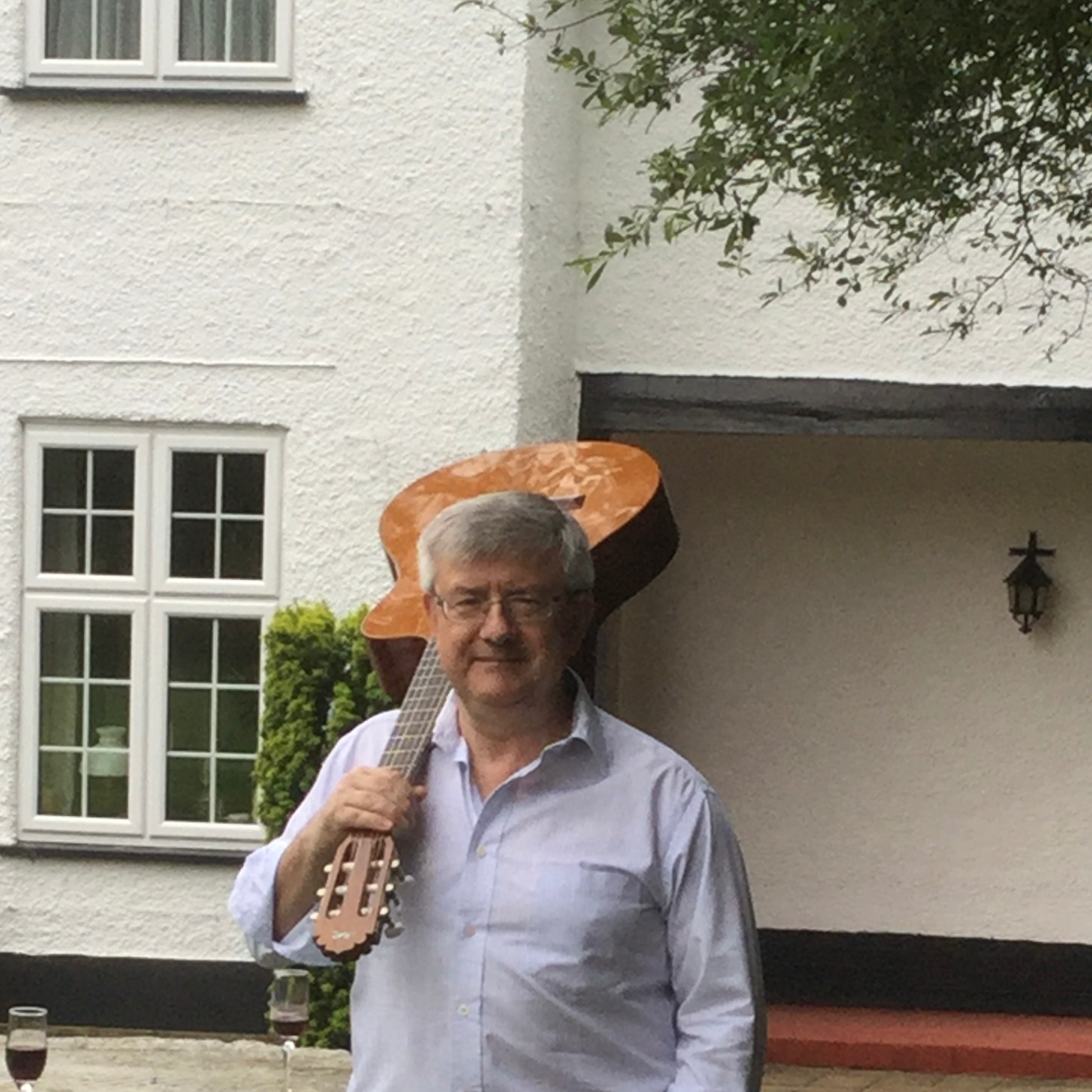
Released on 21 September 2026, the piece is written for two guitars, with both parts played by Howard on his Tanglewood steel-string guitar and recorded at home through overdubbing. Everything is performed in DADGAD tuning, giving the guitars a naturally rich and resonant quality that suits the open landscape Howard is trying to evoke.
The central musical idea is the interaction between the two guitar parts. Howard imagines two sets of church bells answering one another across the valley, so one guitar is treated to sound more distant and echoing while the other remains more present. That call-and-response relationship is what gives “Surrey Bells” its sense of depth. Rather than simply suggesting bells through a melody, Howard creates the impression of hearing them from different points in the landscape.
It is a fitting approach for an artist whose instrumental work is built around conjuring landscapes, images, and moods. Howard’s music begins with a visual or geographical idea and then searches for the textures needed to make that idea audible. In “Surrey Bells,” the space between the two guitars becomes just as important as the notes themselves.
There is also a deliberate looseness to the playing. Howard describes his writing and performance as fluid and organic rather than rigidly structured in the classical tradition. That distinction matters because his background is rooted in classical guitar, yet his musical interests have expanded into folk, blues, rock, and acoustic experimentation. The result is music that respects his classical foundation without being confined by it.
His influences span a particularly interesting range, from Elizabethan lutenist John Dowland and classical guitarist Julian Bream to folk guitarists Davey Graham and Martin Simpson, alongside the acoustic work of rock guitarists Jimmy Page and Ritchie Blackmore. “Surrey Bells” reflects that broad musical vocabulary without needing to sound like any one of those influences.
What stands out most is Howard’s understanding of texture. The piece does not need vocals or a conventional narrative because the guitars themselves are describing something. The resonance suggests the bells, the distance creates the valley, and the interaction between the parts creates movement through the imagined landscape.
“Surrey Bells” ultimately succeeds as a small piece of musical geography. It takes something familiar — the sound of church bells — and asks what it might feel like to hear them from across a countryside landscape. The answer is meditative but not static, spacious but still alive, with two guitars providing all the colour needed to make Surrey briefly appear in the listener’s imagination.
 English