
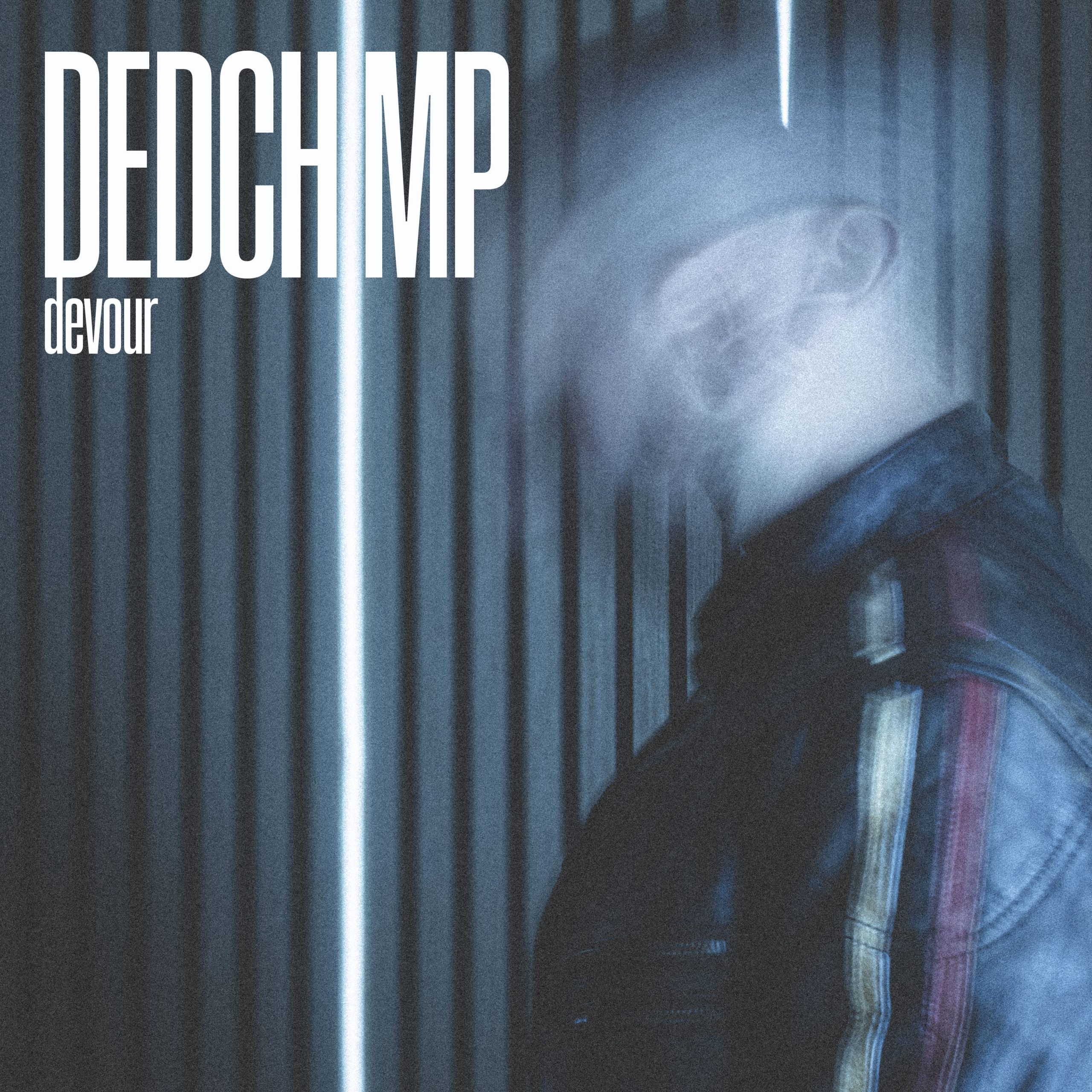
“DEVOUR” is an introduction that does not try to make the listener comfortable. DEDCHIMP arrives with a dark collision of industrial rock, alternative metal, goth and electronic music, using heavy guitars, electronic textures and raw vocals to create a sound that feels deliberately tense and confrontational.
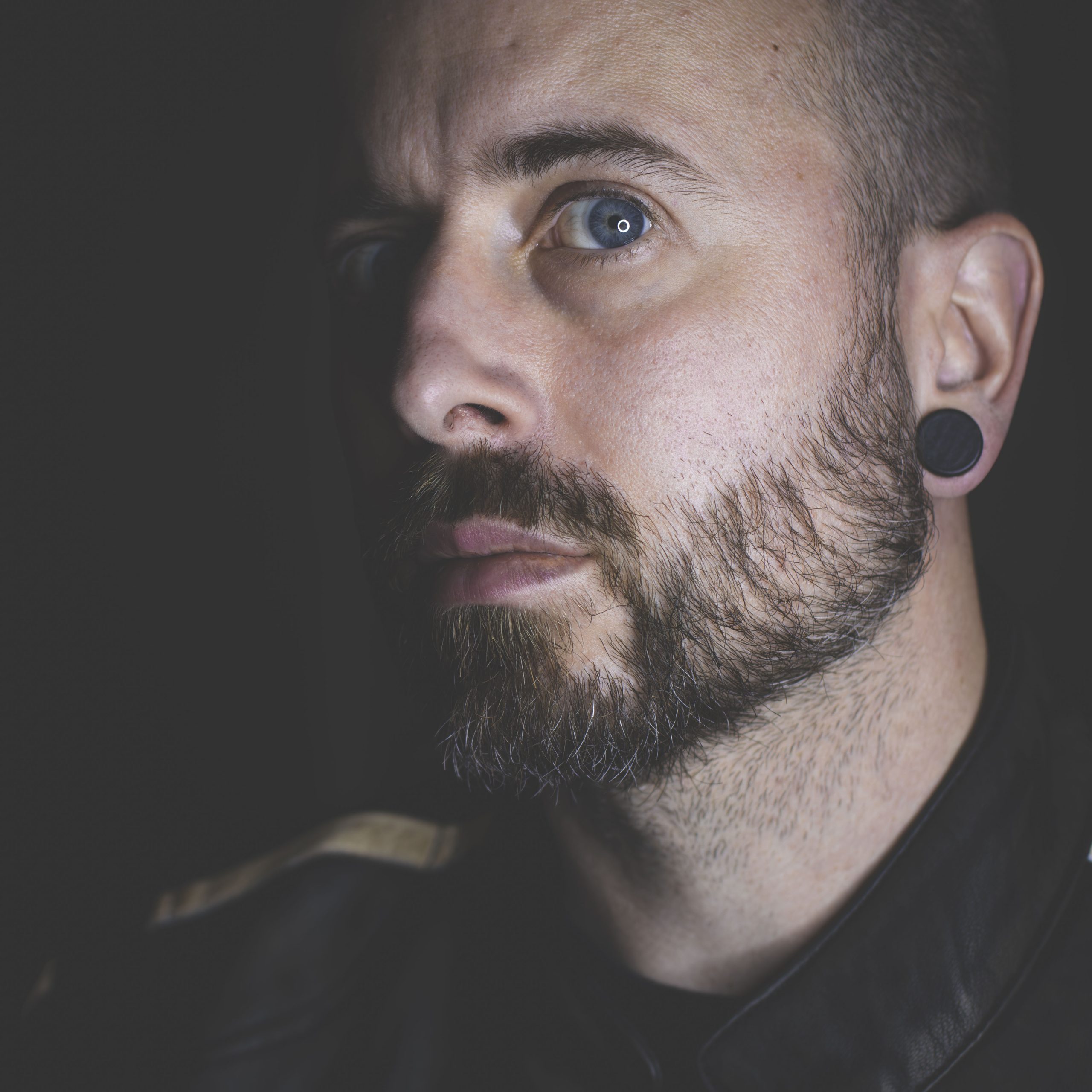
At the centre of the track is the idea of consumption. Not simply what we eat or buy, but the way modern life encourages us to consume almost everything around us: resources, information, technology, attention and even one another. The uncomfortable part is that DEDCHIMP does not place himself outside that criticism. He recognises his own participation in the same system he is observing.
That self-awareness gives “DEVOUR” more depth than a straightforward song about society falling apart. It is not presented as a lecture or a list of answers. Instead, DEDCHIMP takes the role of an observer and holds up a mirror to the listener. The question becomes less about who is responsible and more about whether we are willing to recognise ourselves in what we are seeing.
Musically, the track matches that unease. Industrial electronics and distorted textures sit alongside heavy guitars, while melody keeps the song from disappearing into pure noise. There is aggression in the production, but there is also a clear focus on songwriting. The result sits somewhere between the mechanical intensity of industrial music and the emotional weight of alternative metal, with darker electronic and goth elements adding to its atmosphere.
The influences are clear without making the track feel like an imitation. Nine Inch Nails, HEALTH, Deftones and Linkin Park are among the reference points behind the project, but DEDCHIMP uses those influences as building blocks rather than attempting to reproduce their sound.
There is an interesting story behind the project itself, too. Brighton-based Matthew Parisi spent more than two decades working as a producer and mixing engineer before stepping forward as an artist in his own right. After years of helping other musicians shape their records, DEDCHIMP gives him the opportunity to put his own voice and ideas at the centre.
That experience is noticeable in the way “DEVOUR” brings different elements together. The track is heavy without losing its melodic core, electronic without becoming detached, and dark without relying solely on atmosphere. It feels carefully constructed, but the rawness of the vocals and subject matter keeps it human.
What makes “DEVOUR” particularly effective is that it does not tell the listener what conclusion to reach. It presents an uncomfortable picture and leaves the listener standing in front of it.
The debut ultimately asks a simple question: if humanity is constantly consuming everything around it, what happens when there is nothing left to consume?
Connect with DEDCHIMP on
 English