
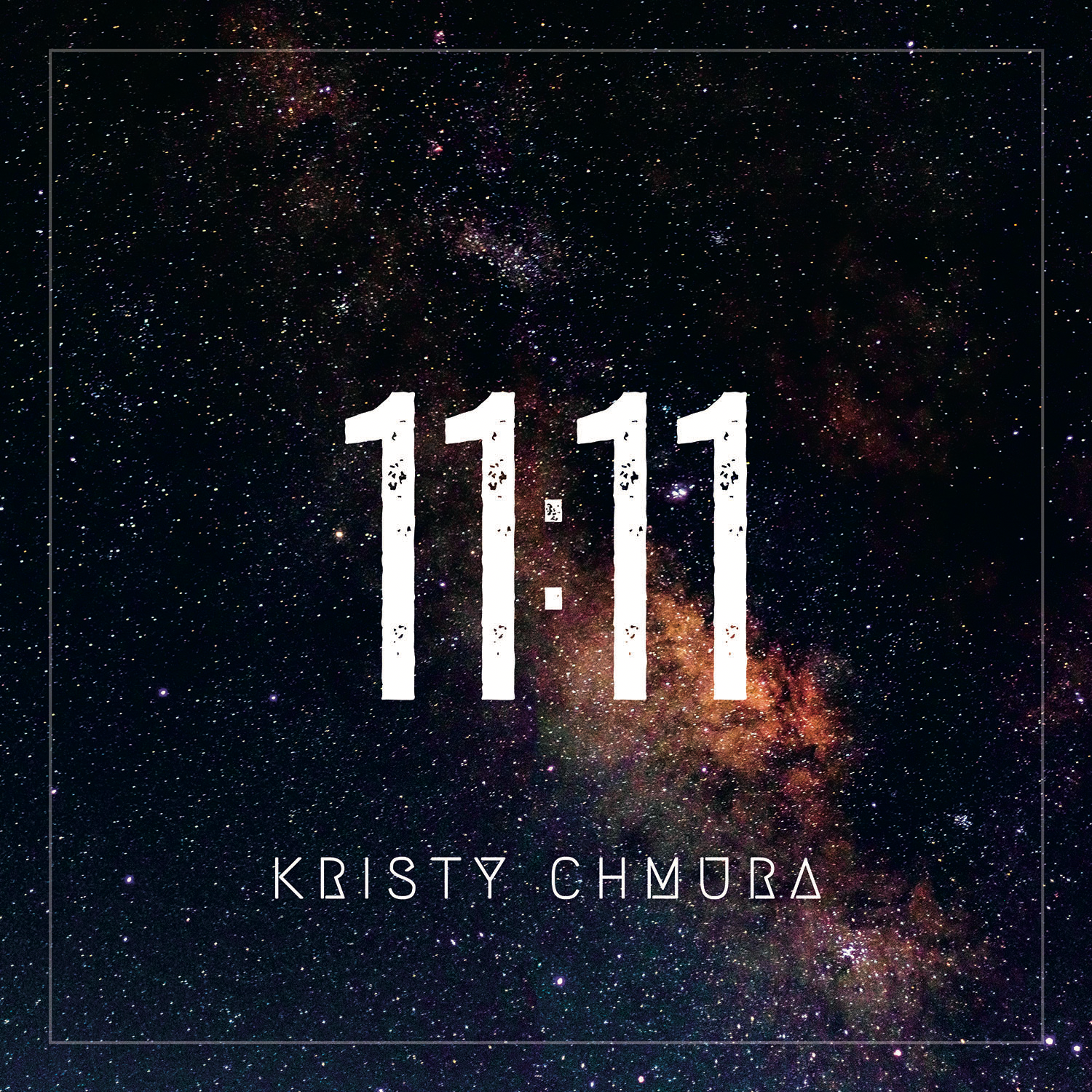
Some songs are written simply to entertain, while others become a way for an artist to work through emotions that are difficult to express in ordinary conversation. 11:11 belongs firmly in the second category. For Kristy Chmura, the song became a personal way of processing loss, grief, and difficult questions about existence. That emotional foundation gives the track a level of vulnerability that is difficult to fake.

What immediately stands out to me is the honesty behind the song. Chmura has openly described writing 11:11 during a period when she was experiencing significant loss, explaining that the process helped her work through her pain and grief while questioning her own existence. Knowing that context changes the way I hear the song. It is not simply an emotional track by design. It comes from an experience that clearly left a mark on the artist.
That personal approach has become an important part of Chmura’s identity as a songwriter. Her music explores the human condition through intimate lyrics and emotive vocals, creating songs that feel less like distant observations and more like personal conversations. She has developed a distinctive artistic voice by bringing together influences that range from Sarah McLachlan to Depeche Mode, combining emotional songwriting with an alternative edge.
What I appreciate most about Chmura is that she doesn’t appear interested in hiding behind a particular genre. Her music has room for vulnerability, atmosphere, and experimentation, allowing the emotional content of each song to determine where it needs to go. That approach feels particularly suited to 11:11, where the subject matter demands space rather than unnecessary embellishment.
Her previous work also shows a steady artistic evolution. Chmura released her debut solo album, Stained…Glass Heart, in 2018 before following it with the 2022 EP Where The Light Gets In. That project received strong praise from Americana Highways, with reviewer John Apice describing it as “so well produced, performed & constructed.” Her forthcoming release, Inner Solstice, promises another significant step in that evolution.
The new project brings together longtime collaborator Damien Musto with Christian Eigner, known for his work as the drummer for Depeche Mode, and Niko Stoessl, who contributes as producer, mixer, engineer, composer, and songwriter. Their collaboration has produced twelve new tracks described as cinematic, soul-searching soundscapes, suggesting that Chmura’s emotional songwriting will be given an even broader sonic environment to exist within.
Ultimately, 11:11 feels like an intimate glimpse into an artist using music as a form of processing and understanding. Its greatest strength is not simply its emotional quality, but the authenticity behind that emotion. Chmura takes something deeply personal and turns it into something listeners can enter with their own experiences of loss, uncertainty, and reflection.
With 11:11 and Inner Solstice pointing toward an increasingly ambitious creative period, Kristy Chmura continues to demonstrate why her songwriting has earned recognition for its ability to move and mesmerize. Her music doesn’t offer easy answers. Instead, it creates a space where difficult emotions can exist, and sometimes that is exactly what a song needs to do.
connect with Kristy Chmura on
 English